
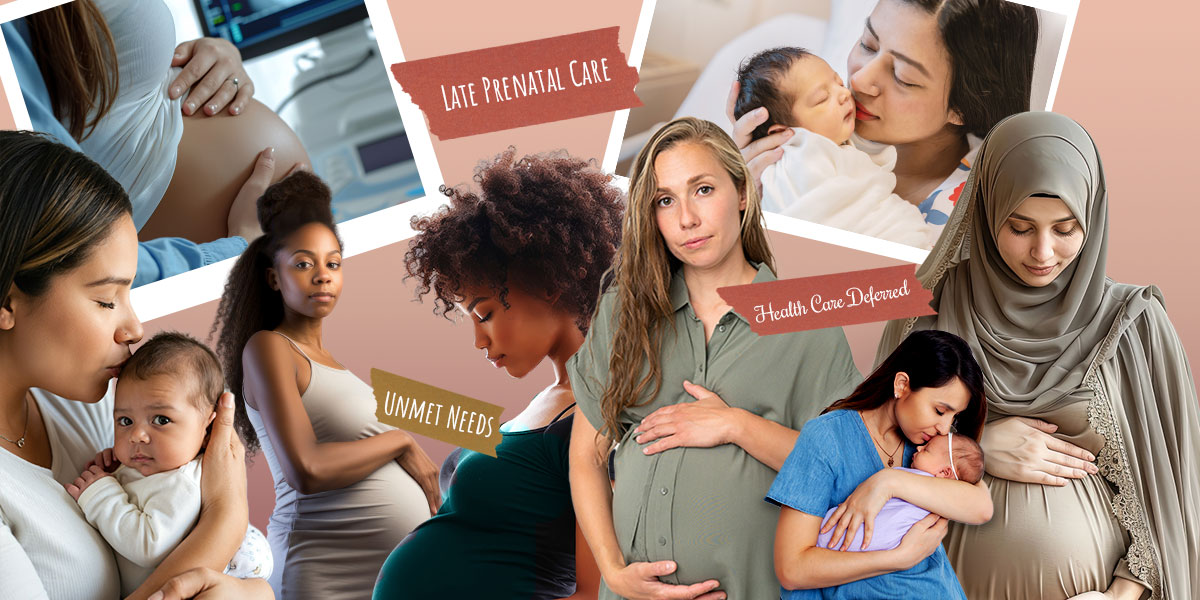
More than 42% of all births in the U.S. are covered through Medicaid, making it the largest single-payer of maternity care. It’s no secret that Medicaid comes with deficits. In Missouri, pregnant people whose births are covered through Medicaid have a seven times higher pregnancy-associated mortality rate than individuals with private insurance. But even with this disparity, Medicaid, especially in expansion states, is providing more than a safety net; it’s saving lives.
According to analysis by Families USA, maternal mortality rates are notably lower in expansion states that have expanded Medicaid coverage up to 138% of the federal poverty level, compared with nonexpansion states. Between 2019 and 2023, maternal mortality rates in nonexpansion states were 35% higher than those in expansion states. The analysis goes on to pinpoint a 46% increase in maternal deaths from 2020 to 2021 in nonexpansion states, compared with a 21% increase during the same period in expansion states. Access to Medicaid, even with its flaws and shortcomings, clearly saves lives.
Access to health insurance will be tentative for many people who need it the most, as House Republicans passed the so-called One Big Beautiful Bill (OBBB) on July 4. Thanks to the bill, the Congressional Budget Office projects roughly 10.9 million people in the U.S. will find themselves uninsured because of changes to both Medicaid and the Affordable Care Act. Other projections for coverage losses are higher. By 2034, the CBO projects 16 million people will be uninsured.
As for Missourians, the changes instigated by the OBBB will increase the uninsured population by an estimated range of 100,000 to 170,000 — the lion’s share will come from policy changes to Medicaid, and about a third from changes to ACA. Medicaid work requirements, reductions in federal matching funds, and biannual redetermination (six months vs. annual) are a few changes that will shove hardworking individuals off of these safety nets. This includes 8 million women, 36% of whom are of reproductive age.
With these cuts and health policy changes, access barriers to both mandatory and optional benefits are inevitable.
Mandatory maternal health benefits include:
- Prenatal doctor visits
- Medicine and supplements
- Ultrasound
- Labor and delivery (childbirth)
- Transportation
- Family planning
- Mental health
- Treatment for chronic or preexisting conditions
- Birth center care
- Midwifery provided by a certified nurse midwife (CNM)
- Postpartum care coverage for 60 days and other benefits
Optional maternal health benefits include:
- All other licensed midwifery care
- Doula support
- Dental support for pregnant people
- Childbirth education classes
- Home births
- Home visits by lactation counselors
- Glucose and blood pressure management tools for home monitoring and other benefits
- 12 months of postpartum care (Missouri increased coverage from 60 days to 12 months in July 2023)

Doula support, from the prenatal period and throughout postpartum, has been associated with lower rates of preterm births, C-sections, mental health conditions, less use of pain medications, and higher rates of breastfeeding. (Photo source: Canva)
These benefits matter
Postpartum is the time after a person gives birth until the child’s first birthday and is often called the fourth trimester. In 2023, 40.6% of pregnancies in Missouri were covered through Medicaid. MO HealthNet expanded postpartum coverage from 60 days to 12 months in 2023 to address the state’s growing maternal mortality rate. The highest incidences of maternal deaths tend to happen 43 days to one year after giving birth.
Extending postpartum coverage from 60 days to 12 months has increased the use of mental health services to address postpartum depression. Mental health conditions, including substance use, are a leading cause of maternal deaths—with the vast majority of these deaths deemed preventable. Extended coverage has also increased use of contraceptives to mitigate unwanted pregnancies, increased follow-up visits to ensure proper care after birth, as well as better management of chronic conditions like high blood pressure, diabetes, and heart disease.
Last October, MO HealthNet began reimbursing for doula services as these nonclinical health workers are making a pronounced impact on maternal and infant health outcomes. Doulas provide physical, emotional, and informational support before, during, and after birth. They advocate for the preferences of those they serve, align culturally, and act as a bridge between the pregnant person and their health care providers.
Doula support, from the prenatal period and throughout postpartum, has been associated with lower rates of preterm births, C-sections, mental health conditions, less use of pain medications, and higher rates of breastfeeding. Although doulas benefit all pregnant people, Black women and birthing people especially benefit as they are at least 2.5 times more likely to die giving birth—regardless of income and socioeconomic status—when compared with their white birthing counterparts.
“From my experience supporting birthing people who are covered through Medicaid, I’ve generally seen clients more apt to seek a wider range of services like prenatal and postpartum visits, behavioral health, dental, and transportation,” said Shariah Edwards, who works as a doula administrator serving both rural and urban birthing people. She added that some Medicaid benefits are limited based on the payer. “The ability to access these services without significant out-of-pocket expenses is a major factor in them receiving needed health care, including labor and delivery costs,” Edwards said.
Medicaid in Missouri and Kansas covers care from a CNM. An advanced practice registered nurse (APRN), CNMs offer a range of services including prescribing medications, gynecological care, family planning, preconception care, pregnancy, childbirth, postpartum, and newborn care. Research indicates that midwifery care is often better than physician care when it comes to natural childbirth for low-risk birthing people. Midwives avoid the use of labor-inducing drugs or other medical procedures, and are responsible for higher rates of breastfeeding, higher rates of birthing satisfaction, and lower costs among many other benefits.
However, for pregnant people with few resources midwifery is as out of reach as consistent access to secure, quality health coverage. With more of the birthing population uninsured, access to contraception is no longer affordable, leading to an increase in unwanted pregnancies. A 2024 KFF Women’s Health Survey found that one in five uninsured women of reproductive age has stopped using a birth control method in the past 12 months because they couldn’t afford it, a rate that is four times greater than those with Medicaid (5%) or private insurance (2%).
If that’s not enough, Title X funding is also on the chopping block. The federal program provides affordable family planning and related preventive health services. Established in 1970, Title X funds a network of clinics that offer contraception, breast cancer and cervical cancer screenings, sexually transmitted infection testing, infertility services, and pregnancy counseling. The program does not fund abortions.
Even so, the current administration is withholding Title X funding from roughly 300 family planning clinics and has proposed to eliminate the program from its FY2026 budget. This will eliminate grant funding to nearly 4,000 clinics for family planning.

For hardworking individuals—across the board—these Medicaid cuts make the struggle real. “As a part-time working professional and a mother of four, the accessibility of Medicaid is not just a convenience; it’s a lifeline,” said Chelsea Huffman, a community health worker living in rural Missouri. (Photo source: Canva)
The impacts are far-reaching
For hardworking individuals—across the board—these Medicaid cuts make the struggle real. “As a part-time working professional and a mother of four, the accessibility of Medicaid is not just a convenience; it’s a lifeline,” said Chelsea Huffman, a community health worker living in rural Missouri. “If Medicaid were harder to access or no longer available, the impact on my family would be immediate and severe.”
She said working part time allows her to be present for her children while still contributing financially, but it means not having employer-sponsored health insurance. Her husband works full time for his family’s small business, which also means he is not offered health insurance.
“Without Medicaid, I would struggle to afford basic medical care for my kids—things like well-child visits, immunizations, dental checkups, and prescriptions,” she said. “Even minor illnesses or injuries could lead to tough decisions about whether to seek care or wait and hope it gets better on its own.”
In a recent statement, Health Forward Foundation outlines key, far-reaching impacts of the OBBB:
-
-
- Work requirements for Medicaid will inevitably lead to eligible people losing their coverage — not because they are unemployed, but because they will face barriers in meeting burdensome reporting requirements. Additionally, states are not prepared or funded by the federal government to administer complex and costly verification of work requirements. This will extend time delays in the redetermination of Medicaid eligibility and create gaps in coverage and care. Missouri already leads the nation in exceeding federal limits on eligibility determinations.
- Most Missourians and Kansans who buy private insurance through the Marketplace will see a significant increase in premiums when they renew their coverage next year.
- Missouri will be limited in its ability to pay its share of Medicaid. In Missouri, a change to the rules around provider taxes will cost the state about $675 million each year. Combined with the loss of federal matching dollars, Missouri’s Medicaid program will lose around $1.9 billion per year in total funding.
- Our region’s rural communities will experience significant Medicaid cuts. A temporary fund of $50 billion created to support rural hospitals will only cover a fraction of the estimated $155 billion in cuts to rural health practitioners. This will threaten the closure of rural hospitals in our states, resulting in job losses and reduced access to essential care.
- People who have immigrated through official channels, including refugees and asylum seekers who meet the requirements to participate in these programs, will be denied Medicaid and Medicare coverage.
- States will be required to pay a portion of food assistance (SNAP) benefits, and work requirements for recipients have been expanded. Households with working-age parents and children may lose some or all of their nutritional support, potentially affecting an estimated 8,000 people in Kansas and 40,000 people in Missouri.
-
When it comes to collective impact, there’s no time like the present
If ever there was a time for collective impact, it’s right now. Collective impact offers a framework for addressing deep, complex social problems by bringing together cross-sector organizations to work together toward a common goal and a common agenda. Working in tandem, they are aligned with strategies, coordinated activities, effective and continuous education, backbone support with a dedicated infrastructure, and shared measurement—including the ability to collect, reflect, and respond to the data gleaned in a meaningful way.
Carefully curated strategic partnership between doulas, community health workers, midwives, nonprofits, community-based organizations, health systems, clinics, social service, and philanthropy, among others, can make a sizable impact in filling access gaps resulting from OBBB, as well as other proposed cuts by this administration. Regardless of the impending collateral damage, this is where we are, and the work must continue. The Reverend Martin Luther King Jr. summed up this moment best when he said: “We must accept finite disappointment but never lose infinite hope.”


