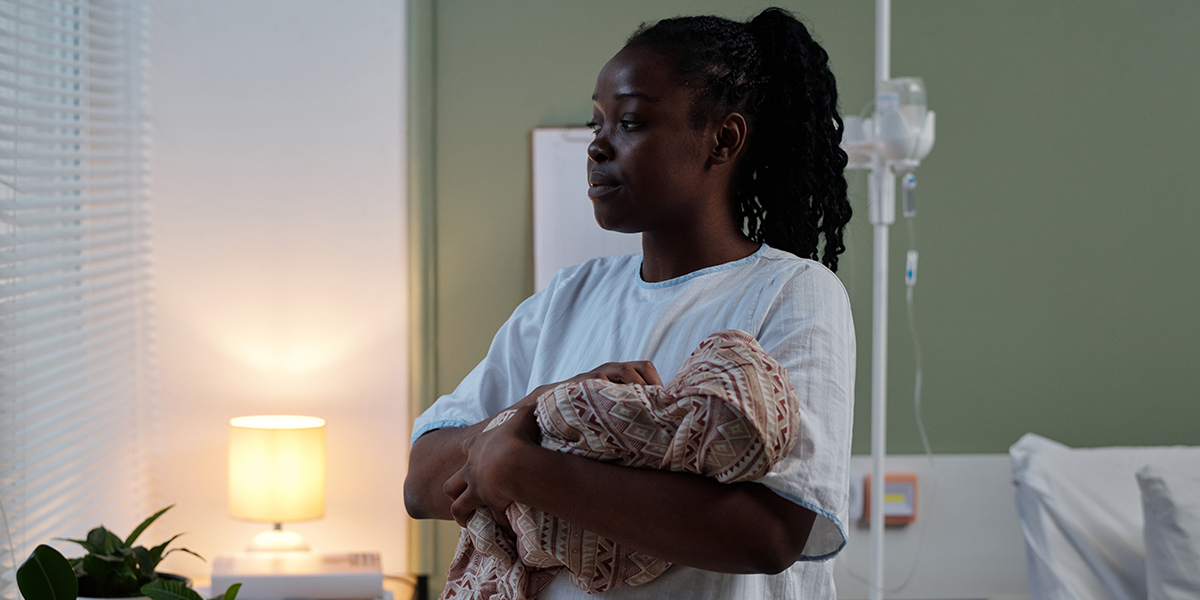
One in three counties in the United States is a maternity care desert, with no birthing hospital and no obstetric clinician, and nearly 70% of them are rural, according to March of Dimes. The organization built that map from three measures: obstetric clinicians, birthing facilities, and insurance coverage among women of reproductive age. Later in the report, in a short section on the limits of its method, March of Dimes acknowledges what those measures leave out. The designations don’t capture all the professionals who support pregnancy and birth, it says, including doulas and community health workers. The map showing where maternity care is missing in this country doesn’t show a doula at all.
Doulas do not deliver babies, manage complications, or make clinical decisions. They are trained, nonclinical professionals whose work begins in pregnancy and continues well past the birth. The March of Dimes links that continuous support to shorter labors, lower intervention rates during delivery, and better follow-through on postpartum care. None of it depends on a hospital bed, physician supervision, or admitting privileges.
Nine rural Missouri hospitals have closed or converted since 2005, according to the Sheps Center at the University of North Carolina. Altruism, Inc., a nonprofit rooted in rural Lafayette County, has run The MaIH Center in Lexington, Missouri, since November 2023, offering doula support through pregnancy, labor, and postpartum recovery, along with birth education, midwifery referrals, mental health counseling through a rural partner provider, and material help ranging from diapers and car seats to fresh produce. For Tristin Dockery, a first-time mother in Lexington, it meant someone to call. “I had someone who was going to be there, who was going to help me focus on what I needed and what I wanted,” she told The Beacon.
The federal government counts the same way March of Dimes does, and there the arithmetic carries a price tag. Maternity Care Target Areas, the shortage designations that steer National Health Service Corps loan repayment toward places with too few maternity providers, are calculated from OB-GYNs and certified nurse-midwives, according to the criteria the Health Resources and Services Administration published in the Federal Register. A rural county that lands one obstetrician changes its federal shortage math. A county that builds a functioning doula corps changes nothing. The measurement rewards the slowest, most expensive fix, the one that depends on recruiting a specialist into a county that has been trying for a decade, and assigns no value to the one a community could build in two years.
In rural counties, 57.9% have no obstetric clinician of any kind, compared with 19.4% of urban counties, and more than 70% lack a hospital with a labor and delivery unit, according to March of Dimes. Families in maternity care deserts drive an average of 42 minutes to reach the nearest one, roughly three times longer than families in counties with full access. The ground is still moving: March of Dimes identified 96 labor and delivery unit closures across 35 states between 2024 and early 2026, and 58.3% of those closures took away a county’s only birthing facility. In the hardest-hit communities, the drive grew by as much as 77 minutes.
The March of Dimes points to doulas as a bridge across those gaps, citing care coordination, education, and continuous support in communities that have lost local obstetric services. The work is older than the systems now failing, rooted in longstanding cultural and community traditions of birth support carried largely by Black birth workers.
Where the gap is widest
A 2025 systematic review in the Maternal and Child Health Journal screened 2,195 articles on rural doula care and found three worth including. Those studies showed rural mothers using doulas less often than mothers in metropolitan areas, and in rural counties where most residents are Black, Native American, or Hispanic, the odds of having a doula fell 70% compared with rural counties that are mostly white. The authors tied that gap to hospital closures, workforce shortages, poverty, and limited insurance coverage, and concluded that the families who stand to benefit most have the least access.
Money compounds it. Median household income in maternity care deserts runs about $10,000 below full-access counties, and uninsured rates among women of reproductive age are highest in maternity care deserts along with rural, border, and tribal counties, according to March of Dimes. Nationally, 1 in 9 women of reproductive age carries no insurance. That matters for a specific reason: nearly every state solution now on the table pays for doula care through Medicaid, and a Medicaid benefit does nothing for a woman who has no coverage to bill.
The money is moving right now
The Rural Health Transformation Program, created through House Resolution 1, will distribute $50 billion to states, according to March of Dimes. Missouri’s first-year award of $216.3 million runs through September 30, 2027, and the state has committed $12.5 million to rural workforce training and clinical education, including maternal workforce expansion for certified nurse-midwives, doulas, and perinatal home visitors, according to the Missouri Department of Social Services. The state has 114 counties, and as of March 2026, 108 doulas were enrolled in its Medicaid program, serving about 625 clients since coverage began, the department reports. Seeding practices in counties that have none is a different undertaking than growing caseloads where doulas already work.
Both Missouri and Kansas cover doula care through Medicaid, and both require a licensed practitioner to recommend the services before they begin, a modest step in a county with a clinic and a real obstacle in a county with almost no clinicians. Missouri lawmakers have identified another gap, one that shorts doulas when a birth ends in a scheduled cesarean section, because the procedure is classified as surgery. A representative for America’s Health Insurance Plans told them the industry remains concerned about education and standardization across the workforce. Design choices like these determine whether a benefit works, which is what Black Mamas Matter Alliance has pressed states on, asking policymakers to “center and defer to Black, community-based doulas” when building programs meant to serve their communities.
Meanwhile, the same law financing the training threatens the coverage beneath it. H.R. 1 cut Medicaid funding and introduced work requirements, and March of Dimes warns those changes could reverse the coverage gains that made doula reimbursement possible. Missouri state Sen. Barbara Washington has pointed to the pressure underneath the numbers, noting that hospitals “are closing at alarming rates” across rural Missouri.
Some will push back, and the worry is fair. If a state gets credit for having doulas, it might stop fighting to reopen the hospital. But counting doulas would not replace counting hospitals. It would sit beside it. Nobody is suggesting a doula stand in for a delivery room. The problem is that today, a county with no hospital and no doula and a county with no hospital and a strong doula program look exactly alike to the agencies handing out money. One of those counties built something worth protecting, and no one can see it.
These are fixable problems, and the people who can fix them are working right now. Missouri’s health agencies and the staff writing the state’s rural health spending plans can count doulas and community health workers when they map where care is missing. Missouri and Kansas can look at what the practitioner recommendation requirement does in counties with few practitioners. Missouri lawmakers can close the cesarean billing gap they have already identified. And everyone pushing to expand doula coverage still owes an answer to the women in these counties who have no insurance at all, because a Medicaid benefit only reaches women covered by Medicaid.
The March of Dimes says it plainly: maternity care deserts didn’t happen by accident. They result from policy choices and years of underinvestment. The doula shortage happened the same way: through what states chose to measure and pay for. Those choices land on real people. In Lexington, they landed on a young mother who did not know what she was doing and found someone who did. “She came to my house. She watched the baby so I could take a nap. She offered to help me clean up. And she really just sat with me a lot and talked through it all,” Dockery said of her doula. A woman in the next county may need that help more and is less likely to get it. She will not show up as a gap on anyone’s map, because the map was never built to look for her.