
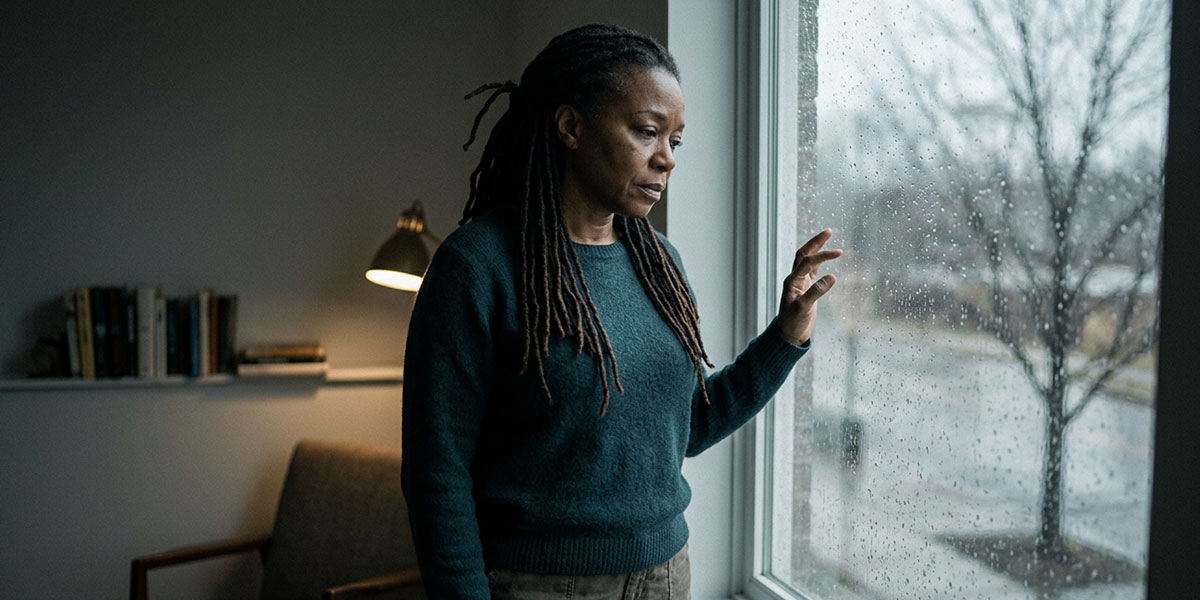
Tonya Arends had always thought of herself as steady. Then, in her early 50s, ordinary moments during her shifts as a nursing assistant began reducing her to tears, and she found herself crying in the hospital bathroom over things that had never rattled her before. As she told Stanford Medicine, the change frightened her, because it was so unlike the levelheaded person she knew herself to be. What Arends was experiencing was not a breakdown in her character. It was the menopausal transition reshaping her emotional life, and a growing body of research now confirms that this connection is real, measurable, and treatable.
Her story is far from unusual. Across Kansas City and the country, women arrive in clinics with a familiar cluster of complaints, including irritability that arrives without warning, a low mood that no longer tracks the menstrual cycle, fractured sleep, and a creeping anxiety they cannot name. Many are told it is stress, or simply the cost of being a woman in midlife. Science tells us a different story.
The shift in attention could not come at a more consequential moment. In November 2025, the U.S. Food and Drug Administration moved to remove the decades-old boxed warnings about cardiovascular disease, breast cancer, and probable dementia from hormone therapy products containing estrogen, concluding that the original labels overstated risk for appropriately selected, younger symptomatic women. The FDA also added guidance that hormone therapy may be considered for women younger than 60 or within 10 years of menopause onset, while retaining a targeted warning about endometrial cancer for estrogen-alone products used by women with an intact uterus. For clinicians and patients alike, the change has reopened a conversation that the medical community largely abandoned more than 20 years ago.

Missouri already carries one of the heaviest depression burdens in the country. According to the Centers for Disease Control and Prevention, an age-standardized 23.4% of Missouri adults reported having been diagnosed with a depressive disorder in 2020, placing the state among the 10 highest in the nation. (Photo source: Canva)
How common the mood symptoms really are
The emotional symptoms of the menopausal transition are far from rare, and they are often more disruptive than the hot flashes that dominate public understanding of menopause. The American College of Obstetricians and Gynecologists reports that about 4 in 10 women experience mood symptoms during perimenopause, including irritability, low energy, tearfulness, and difficulty concentrating. Unlike premenstrual syndrome, these symptoms may surface at times unrelated to the menstrual cycle, and they can persist for years without predictability.
The risk of clinical depression also climbs during this window. In a clinical overview, psychiatrist Ruta Nonacs of the Center for Women’s Mental Health at Massachusetts General Hospital and instructor in psychiatry at Harvard Medical School, notes that women are roughly two to four times more vulnerable to depression during perimenopause than at other points in their lives, with the steepest risk among women who have a prior history of depression or postpartum depression. The biology behind this is now better understood. During perimenopause, which the median woman enters in the years before her final period around age 51, estrogen levels do not simply decline. They rise and fall erratically, and those fluctuations influence the same brain chemistry that governs mood and anxiety. Mood and sleep changes can even appear years before the first hot flash, which is part of why the cause is so often missed.
The regional picture sharpens why this matters in Kansas City. Missouri already carries one of the heaviest depression burdens in the country. According to the Centers for Disease Control and Prevention, an age-standardized 23.4% of Missouri adults reported having been diagnosed with a depressive disorder in 2020, placing the state among the 10 highest in the nation, and several Missouri counties ranked among those with the worst burden nationwide. Kansas sat closer to the middle at 19.6%. The same surveillance data show that women report a lifetime depression diagnosis at nearly twice the rate of men, 24.0% compared with 13.3%. For women moving through perimenopause in a state where depression is already widespread, the menopausal transition lands on top of an elevated baseline.
What the evidence supports first
For all the renewed enthusiasm about hormone therapy, the clinicians who specialize in women’s mental health are careful to define its place. Dr. Nonacs is emphatic that menopausal hormone therapy is not a first-line treatment for major depressive disorder or anxiety disorders in midlife women. The established first-line interventions remain the same as they are outside the menopausal window, namely cognitive behavioral therapy and antidepressant medications such as selective serotonin reuptake inhibitors (SSRIs) and serotonin-norepinephrine reuptake inhibitors (SNRIs). She favors the serotonergic agents in particular, because they tend to work well for the anxiety that so often accompanies the transition and can ease vasomotor symptoms at the same time.
That distinction matters because it protects women from a tempting oversimplification. The idea that hormone therapy is a universal fix for midlife distress is as misleading as the older idea that hormones were uniformly dangerous. Mood and anxiety symptoms in midlife arise from an interplay of hormonal change, life stress, sleep disruption, and psychiatric history, and effective care addresses all of those threads rather than any single one. Some nonhormonal antidepressants offer an added advantage here, because medications such as venlafaxine can ease both mood symptoms and the hot flashes and night sweats of the transition at once. Cognitive behavioral therapy, exercise, and attention to sleep remain foundational, and they carry none of the contraindications that limit who can safely use hormones.
For all the renewed enthusiasm about hormone therapy, the clinicians who specialize in women’s mental health are careful to define its place. (Photo source: Canva)
Where hormone therapy enters the picture
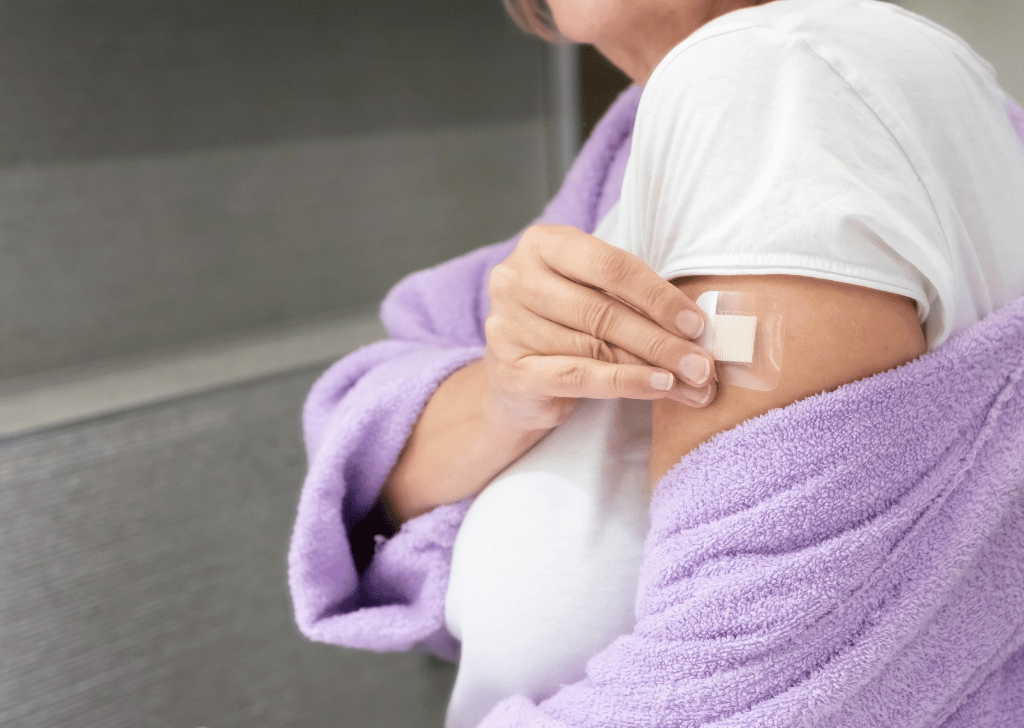
None of this means estrogen has no role in treating mood. Dr. Nonacs points to randomized controlled trials suggesting that estradiol can have genuine antidepressant effects in some perimenopausal women, either alone or alongside an antidepressant, particularly when mood symptoms are clearly tied to hormonal fluctuations. In a frequently cited trial detailed in her companion primer for mental health providers, 12 weeks of transdermal estradiol led to remission in 68% of perimenopausal women with moderate depression, compared with 20% of those who received a placebo. A separate trial found that transdermal estradiol combined with progesterone halved the incidence of new-onset depressive symptoms over 12 months in women who began without depression, pointing toward a possible preventive role for those at high risk.
The clinical scenarios in which hormone therapy earns consideration are specific rather than universal. Dr. Nonacs describes several, including women who respond only partially to an antidepressant but continue to struggle with hot flashes, insomnia, and cognitive fog, and women whose depressive symptoms worsen sharply in late perimenopause or after an abrupt loss of ovarian function. In those cases, hormone therapy may be added alongside psychiatric treatment, ideally through collaboration among a woman’s mental health provider, her gynecologist, and her primary care clinician.
When hormones are used, formulation matters. Dr. Nonacs and many other specialists favor transdermal estradiol delivered via a patch, gel, or spray, because it avoids the first-pass effect on the liver and carries a lower risk of stroke and blood clots than oral preparations. Women who still have a uterus require a progestogen to protect the uterine lining. Hormone therapy is not appropriate for everyone, however, and the clear contraindications include a personal history of estrogen-dependent cancer, unexplained vaginal bleeding, and prior estrogen-related blood clots or stroke.
Closing the care gap in Kansas City
The FDA’s relabeling will not, on its own, reach the women who need help. Most gynecologists and internists practicing today trained in the years after the Women’s Health Initiative, when hormone therapy fell out of favor, and many report limited education in how to prescribe it. Karen Adams, M.D., a clinical professor of obstetrics and gynecology and director of the Stanford Menopause and Healthy Aging program, told Stanford Medicine that most people go through menopause without medical care, not because they avoid it, but because “in many locations, expert menopause care isn’t available.” Women across Missouri and Kansas frequently struggle to find a clinician equipped to discuss hormone therapy at all. Into that gap have stepped a wave of direct-to-consumer telehealth companies, which expand access but leave many women uneasy about prescriptions from clinicians they have never met.
The gap is not evenly felt. The Study of Women’s Health Across the Nation, a 25-year cohort following women through midlife, has found that Black women reach menopause earlier than white women, experience hot flashes and night sweats that are more frequent, more severe, and longer lasting, and report higher rates of depressive symptoms during the transition, yet are less likely to receive hormone therapy or mental health care. The researchers who synthesized those findings attribute the pattern not to biology alone but to the cumulative physiological toll of stress and structural inequity over a lifetime. That dynamic is visible close to home. Marvia Jones, director of the Kansas City Health Department, has noted that maternal health outcomes for white women in the city are improving while those for women of color are not, a divergence she has tied to social conditions and to Black women’s reports of feeling dismissed by medical providers. The same forces that shape those outcomes follow women into midlife.

Black women reach menopause earlier than white women, experience hot flashes and night sweats that are more frequent, more severe, and longer lasting, and report higher rates of depressive symptoms during the transition, yet are less likely to receive hormone therapy or mental health care. (Photo source: Canva)
A woman who cannot find informed care is not failing to advocate for herself. She is navigating a workforce trained during a period of caution science has since revised, in a region where access to women’s specialty care varies sharply by neighborhood and insurance status. The practical answer lies in collaboration. Mental health providers are often the first to hear these symptoms described out loud, and even when they do not prescribe hormones, they can validate what a woman is experiencing, offer evidence-based psychiatric treatment, and connect her with a gynecologist or menopause specialist for a complete or full conversation.
The encouraging truth beneath the policy headlines is that menopausal mood and anxiety symptoms respond to treatment. For Arends, who began a regimen of estradiol and progesterone, the turnaround was swift. Within the first month, she described feeling like herself again: “I had no more random crying.”
Women do not have to wait out years of irritability, sadness, and sleeplessness as though the transition were a sentence to be served. For any woman who feels overwhelming distress or who is having thoughts of harming herself, the 988 Suicide and Crisis Lifeline offers free, confidential support by call or text at any hour.
The first step, for everyone else, is simply naming what is happening and asking for care that the evidence now supports.


