

The proof is in the proverbial pudding. Community Health Workers (CHWs) manifest real results. A randomized controlled trial of a CHW engagement model found that CHWs providing personalized care for multi-chronic patients living in neighborhoods with few health care resources, where individuals were uninsured or receiving public health insurance, resulted in fewer hospitalizations, shorter average length of stay, and improvement in reported quality of care.
For Hispanic and Black diabetes patients who experience poverty, CHW intervention resulted in 94% of participants attending follow-up visits, greater satisfaction in understanding medication information, and reduced stress related to their illness.
CHWs have been identified as key agents in mitigating the effects of incarceration, providing justice-involved individuals with social support and facilitating their success in their communities.
And when you add local gains to health care access for the area’s citizens who need it the most, the advantages of CHWs and the impact they make are hard to quantify. Yet, funding for CHWs is on the chopping block alongside other safety nets. Missouri Gov. Kehoe recently presented lawmakers with his $54.5 billion state operating budget for fiscal year 2027. It’s more than $600 million lower than his budget proposal for the current fiscal year. Funding for CHWs is expected to be cut by $5 million.
CHWs are the mediators between health practitioners and patients. Their invaluable role as advocates, educators, informal counselors, and supporters helps improve the patient’s experience. Their contributions often go unnoticed, yet their impact is profound, particularly among hardworking individuals who still find gaining access to care challenging. CHWs are the unsung heroes who bridge access gaps by connecting patients with providers.
In the health care landscape, community health workers (CHWs) stand as pivotal figures. They wield profound influence on health care access and outcomes, particularly within underserved communities. Due to geographical barriers, financial constraints, or cultural beliefs, certain populations face significant hurdles in obtaining essential health care. A CHW serves as a bridge, connecting communities with much-needed resources and support. CHWs tend to have a deeper understanding of the community they serve because they are often members of the same community.

CHWs are the unsung heroes who bridge access gaps by connecting patients with providers. (Photo source: Adobe Stock Photo)
“A community health worker consistently expands the range of available resources for the people we serve – and does so in a culturally competent manner,” said Sam Rodgers’ CEO Bob Theis. “They understand the importance of sharing reliable information and resources because sharing truly is caring. The Samuel U. Rodgers’ team of CHWs takes pride in addressing needs, while also adding valuable options to our resource menu.”
One huge factor is that CHWs share a common language, culture, and lived experience that help them connect to the patient. This cultural competence allows CHWs to build trust, an essential component of effective health care delivery. By tailoring their approaches to align with local customs and beliefs, CHWs help ensure that health care interventions are culturally sensitive and relevant.
Prevention is the cornerstone of public health, yet people often suffer from health problems because they don’t have the tools or information to help prevent them. CHWs are at the forefront of health education, sharing information about nutrition, hygiene, and disease prevention through workshops, home visits, and community events.
CHWs also play a pivotal role in chronic disease management, providing ongoing support, monitoring, and education to individuals grappling with conditions like diabetes, hypertension, or asthma. By offering personalized care and guidance, CHWs empower patients to effectively manage their conditions and prevent further complications, enhancing overall health outcomes.
Beyond education, CHWs serve as advocates for their communities, amplifying their voices and addressing systemic barriers to health care access. They can help individuals navigate complex health care systems, access social services, or advocate for policy changes that promote health equity. By championing the rights and needs of their communities, CHWs motivate individuals to advocate for themselves and effect positive change.
For many years, Sam Rodgers’ CHW program has shown a strong return on investment. Missouri’s current funding framework allows for partial reimbursement of CHW services, with the remaining costs covered through grants, philanthropy, and partnerships with organizations such as the Health Department and the Department of Mental Health. This funding structure not only sustains the program but also underscores the value of CHWs in providing cost-effective, community-based care.
“In health care, the CHW is helping us to go back to the basics, which is prevention rather than intervention. That’s the real return on investment,” said Sam Rodgers’ retired director of behavioral health, Dr. Manuel Solano.
But as funding cuts loom for this critical role, a major pivot is needed to sustain the many gains made by CHWs. This includes addressing the more than 80% of essential care that originates outside of a doctor’s visit, those social drivers of health that CHWs are so stealthily poised to address.
Organizations like Sam Rodgers will feel the void if these cuts come to fruition, and so will the growing number of people who need this support the most. In this moment, advocacy is key. Contact your Missouri legislator and let them know that CHWs are a mainstay, their work is unparalleled, and our communities need them to stick around.
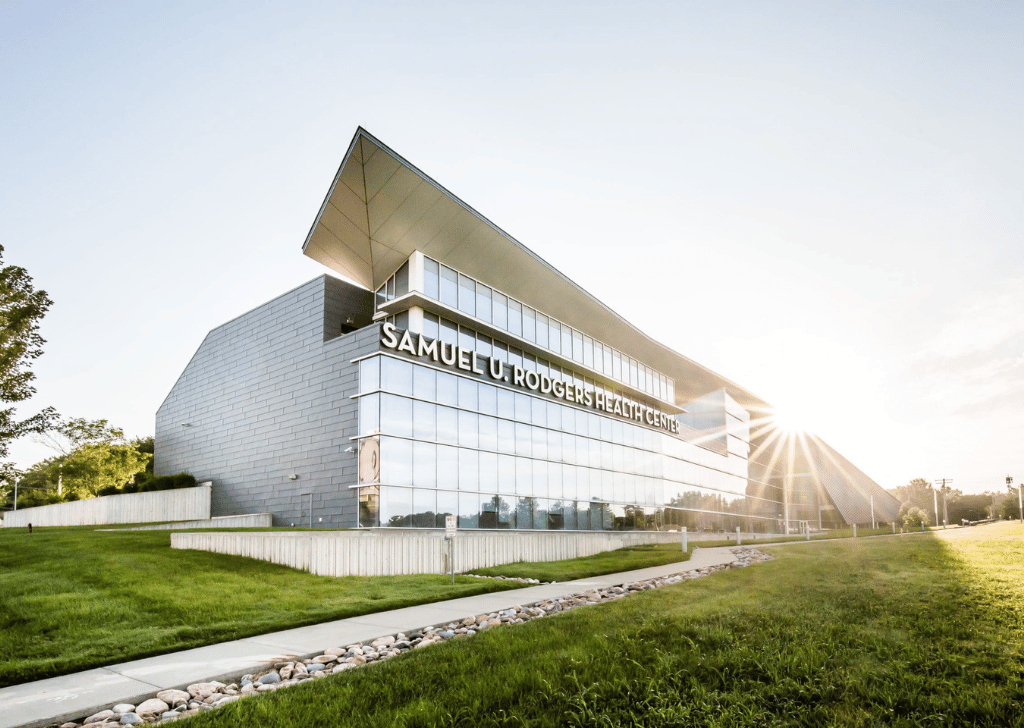
“A community health worker consistently expands the range of available resources for the people we serve – and does so in a culturally competent manner,” said Sam Rodgers’ CEO Bob Theis. (Photo courtesy of Samuel U. Rodgers Health Center.)
A Look at the History of CHWs
Before the emergence of CHWs in the United States, it had international roots. In the 1960s, China saw a need to implement what was originally called “barefoot doctors.” In China, these doctors became invaluable to the health care system because they were able to service and build relationships with patients in communities that were once difficult to reach. China institutionalized barefoot doctors and renamed them as community health workers. These initial community health workers merged health care provision with grassroots engagement, setting a precedent for community-based health initiatives worldwide.
The 1970s marked a turning point as CHWs gained traction within the American Public Health Association (APHA), ultimately leading to a new era of advocacy and recognition for CHWs. Initially conceptualized as a mediator between underserved communities and health care services, CHWs gradually evolved into front-line public health warriors.
The 1980s witnessed seminal milestones, notably with the birth of Migrant Health Promotion (MHP) Salud’s Camp Health Aide Program. Historically, MHP only served migrant workers, but they now serve the Latino and Hispanic community at large. Armed with a modest grant, MHP Salud embarked on a journey to empower communities through grassroots health interventions. This pioneering initiative laid the groundwork for subsequent CHW-led interventions across the Midwest, Texas, and Florida, reshaping the landscape of community health care delivery.
In the late 1990s, the National Community Health Advisor Study provided a blueprint to dictate core roles and competencies of CHWs. Subsequent studies, such as the HRSA National Workforce Study in 2007, underscored the cost-effectiveness and efficacy of CHW-led interventions, catalyzing broader recognition within the health care ecosystem.
Although there was much talk and many attempts to implement CHWs in the U.S. public health sphere, it wasn’t until 2010 that the Bureau of Labor Statistics formally recognized CHWs as a legitimate health industry profession and acknowledged their pivotal role in public health. This unlocked a myriad of employment opportunities and funding avenues for CHWs in the United States.
The pivotal rule by the Centers for Medicare and Medicaid Services (CMS) in 2013 marked a paradigm shift, extending reimbursement mechanisms for CHW-led preventive services. This landmark decision not only diversified funding streams but also affirmed the integral role of CHWs in preventive health care, catalyzing a ripple effect across the health care landscape.
Embedded within the name “Promotores de Salud” lies a profound ethos of community empowerment. Translated as “Promoters of Health,” this name captures the essence of CHWs as catalysts for change within their communities. Beyond mere health care provision, Promotores de Salud embodies trust, cultural competence, and grassroots engagement, fostering enduring bonds with those they serve.
The evolution of community health workers in the United States is a testament to resilience, advocacy, and the transformative power of grassroots initiatives. From humble beginnings to institutional recognition, CHWs have transcended barriers, bridged divides, and championed health equity for all.
The work of CHWs goes beyond addressing immediate health concerns; it contributes to the long-term resilience of a community. This is evidenced by the fact that the Bureau of Labor Statistics projects the CHW workforce will grow by 14% from 2020 to 2030. Contact your state legislators and let them know that CHWs are health care’s unsung heroes. Ask them not to cut the $5 million used to support CHWs throughout Missouri.


